 Essential
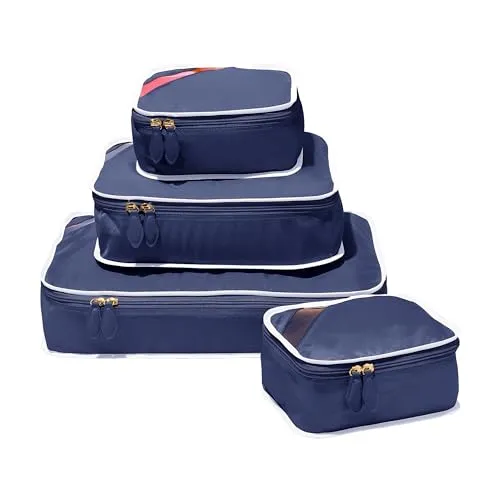
Packing Cube Quad
Set of 4 Organization Cubes
$75

Master the art of efficient packing with expert strategies, tips, and techniques for stress-free travel.
Packing is both an art and a science. Done well, it transforms travel from a logistical challenge into a seamless experience. Done poorly, it leads to overstuffed bags, wrinkled clothes, forgotten essentials, and the nagging feeling that you've brought too much while somehow still lacking what you need.
The good news is that efficient packing is a learnable skill. With the right approach, tools, and mindset, anyone can become a packing expert who travels lighter, smarter, and with less stress. This guide shares the strategies that frequent travelers have refined over countless trips, adapted for travelers at every experience level.
At its core, smart packing rests on a few fundamental principles: intentionality in what you bring, organization in how you arrange it, and flexibility to handle the unexpected. Master these principles, and you'll find that even a carry-on like the Paravel Aviator can accommodate surprisingly extended trips.
Effective packing starts before you open your suitcase. The planning phase is where you make the strategic decisions that determine whether you'll travel light or lug around unnecessary weight.
Understanding where you're going shapes what you need to bring. Consider the climate and weather forecast - will you need layers, rain gear, or sun protection? Think about the cultural context - are there dress codes for religious sites, upscale restaurants, or business meetings? Research the activities you have planned - will you need hiking boots, swimwear, or formal attire?
Also consider practical factors: Will you have access to laundry facilities? Are there stores where you could buy forgotten items if needed? What's the electrical system - do you need adapters? This research helps you pack appropriately without over-preparing for unlikely scenarios.
A written list is essential for organized packing. Start by listing everything you think you might need, then ruthlessly edit. For each item, ask: Will I definitely use this? Can something else serve the same purpose? What's the consequence of not having it?
Categorize your list by type: clothing, toiletries, electronics, documents, medications, and miscellaneous. This organization helps ensure nothing is forgotten and makes packing systematic rather than chaotic.
Many experienced travelers maintain a permanent packing list that they customize for each trip, adding or removing items based on the specific destination and activities. This template approach speeds up planning and reduces the chance of forgetting regular travel essentials.
The secret to packing light is versatility. Select clothing items that can be mixed and matched to create multiple outfits. Stick to a coordinated color palette - usually neutral bases with one or two accent colors - so everything works together.
Prioritize pieces that can transition between contexts. A quality button-down works for business meetings, nice dinners, and casual sightseeing. Dark jeans or chinos dress up or down. A lightweight cardigan or jacket layers over anything. Each item should earn its place by serving multiple purposes.
Fabrics matter too. Merino wool resists odors and regulates temperature. Technical fabrics dry quickly if you need to wash items. Wrinkle-resistant materials look better after being packed. Investing in travel-friendly clothing pays dividends in packing efficiency.
How you pack matters as much as what you pack. The right techniques maximize space, minimize wrinkles, and keep everything organized and accessible.
The rolling vs. folding debate has a nuanced answer: use both methods strategically based on the garment.
Rolling works best for casual, soft items: t-shirts, underwear, socks, pajamas, lightweight knits. Rolling saves space, reduces wrinkles in these materials, and creates uniform cylinders that pack efficiently into gaps and packing cubes.
Folding works better for structured, wrinkle-prone items: dress shirts, blazers, dress pants, structured dresses. These items benefit from being laid flat with minimal folding. Place them on top of your packed items or use tissue paper between folds to reduce creasing.
Some travelers use a hybrid technique called bundle packing, where clothes are wrapped around a central core (like a packing cube of underwear) in alternating layers. This minimizes fold lines and can work well for formal wear.
If there's one packing tool that transforms travel organization, it's packing cubes. These simple containers offer multiple benefits that compound over the course of a trip.
Compression: Packing cubes let you compress clothing to reduce volume. Zip them closed and you'll fit more in the same space. Some cubes feature compression zippers that squeeze contents even further.
Organization: Separate cubes for different categories - one for tops, one for bottoms, one for underwear - means you know exactly where everything is. No more digging through your entire bag to find a specific item.
Flexibility: Packing cubes make it easy to unpack partially. Pull out just the cube you need, leave the rest in your bag. For short stays, you might not fully unpack at all.
Containment: If something spills or gets dirty, it's contained within one cube rather than contaminating your whole bag. This compartmentalization provides peace of mind.
Where you place items within your bag affects both accessibility and bag handling. Follow these placement principles:
Heaviest items go near the wheels (bottom of upright luggage). This keeps the center of gravity low, making the bag more stable and easier to roll. Shoes, toiletry bags, and heavy electronics belong here.
Frequently needed items go on top or in exterior pockets. Things you might need at security (laptop, liquids bag) or upon arrival (phone charger, change of clothes) should be easily accessible without unpacking everything.
Fragile and wrinkle-prone items go in the middle, cushioned by softer items. Your dress shirt or delicate souvenirs benefit from the padding of rolled t-shirts surrounding them.
Fill gaps with small, soft items. Socks and underwear are perfect for stuffing into shoes or filling corners. No space should go unused.
A weekend trip is the perfect candidate for carry-on only travel. In a 42L bag like the Aviator Carry-On, you can easily fit:
For weekend trips, plan to wear items more than once. A top worn for a few hours sightseeing can hang overnight and be perfectly fresh the next day.
Business travel requires more structured clothing but can still be done carry-on only with careful planning. Consider the Aviator Carry-On Plus for its extra capacity:
For longer business trips, consider hotel laundry service or pack a few dryer sheets and plan to freshen items between wears.
Longer trips challenge the carry-on-only approach but it's still possible for determined minimalists. Otherwise, this is where the Aviator Grand shines:
For trips over a week, accept that you'll likely do laundry. Pack detergent sheets or plan to use hotel services. This frees you from trying to bring two weeks of clothes.
TSA liquid rules (3.4 oz/100ml containers in a quart-sized bag) constrain carry-on travelers. Strategies to work within these limits:
A dedicated toiletry bag keeps these items organized and makes security screening faster.
Modern travelers often carry multiple devices. Manage electronic packing by:
Shoes are often the biggest packing challenge due to their bulk and weight. Minimize the shoe problem by:
Smart travelers plan for the return journey, which often involves more stuff than you started with due to souvenirs and purchases.
Leave a little space: Don't pack your outbound bag to absolute capacity. Leave room for return trip additions.
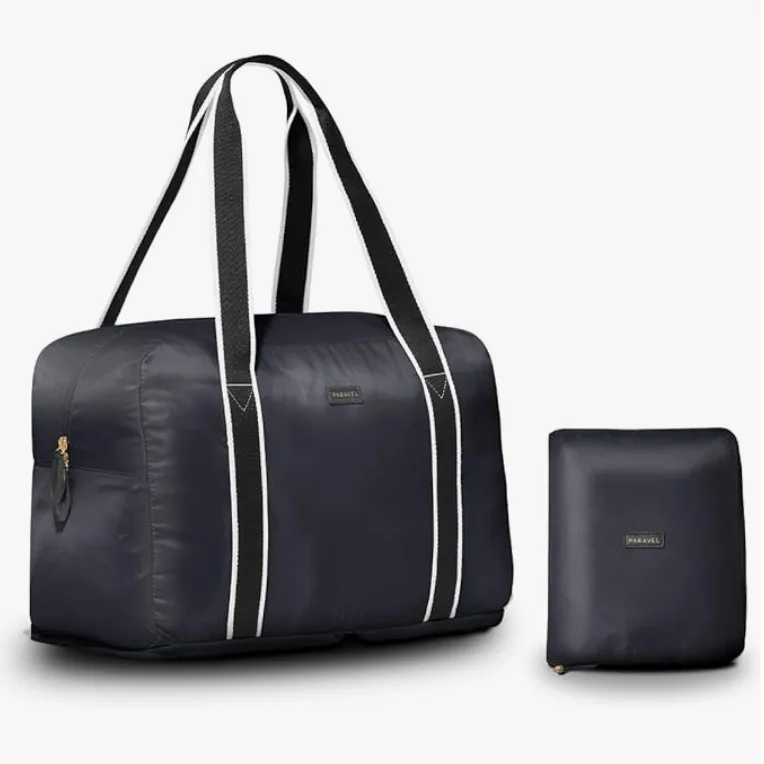
Bring a packable bag: A Fold-Up Weekender or similar packable bag takes almost no space but expands to provide significant extra capacity for the return.
Wear bulky purchases: If you buy a sweater or jacket, wear it on the plane home rather than trying to pack it.
Ship items home: For significant purchases, especially fragile items, consider shipping them rather than trying to pack everything.
Becoming a better packer happens gradually through mindful practice:
After each trip, reflect: What did you pack but not use? What did you wish you'd brought? What worked well? Use these insights to refine your approach for next time.
Invest in quality travel gear: Good packing cubes, a thoughtfully designed toiletry bag, and well-organized luggage make packing easier and more effective. The Paravel accessories collection is designed specifically to support efficient packing.
Practice restraint: The urge to overpack comes from anxiety about being unprepared. Remind yourself that most destinations have stores, that you can wash clothes, and that you'll enjoy your trip more without lugging excess baggage.
Embrace the carry-on challenge: Even if you don't always travel carry-on only, occasionally challenging yourself to do so builds packing skills that make all your travels more efficient.
Use this checklist as a starting point and customize for your specific trip.
The tools that make efficient packing possible